
Simple Strength Exercises to Support Everyday Mobility After 50
Strength supports many of the movements we use every day. Standing from a chair, carrying groceries, climbing stairs, reaching for a shelf, and getting up from the floor all become easier when the muscles in your legs, hips, back, arms, and core are regularly challenged.
After 50, a simple strength routine can help support everyday mobility without requiring complicated equipment or intense workouts. The goal is not to lift the heaviest weight or move the fastest. Instead, focus on controlled movements, good form, and steady progress.
Before starting, choose a clear space and wear comfortable shoes. If you have an ongoing health concern, recent injury, or questions about which exercises are right for you, consider speaking with a qualified health professional. Stop if you feel sharp pain, unusual dizziness, or shortness of breath.
How Strength Supports Everyday Movement
Everyday mobility depends on more than flexibility. It also requires strength, coordination, balance, and confidence.
Strong leg and hip muscles can help with:
- Standing up from a chair
- Walking on different surfaces
- Climbing stairs
- Stepping over small obstacles
- Getting in and out of a car
Upper-body and core strength are useful for carrying bags, opening doors, lifting light household items, and maintaining a comfortable posture. A balanced routine should include exercises for several areas rather than focusing on just one muscle group.
Simple Strength Exercises to Try
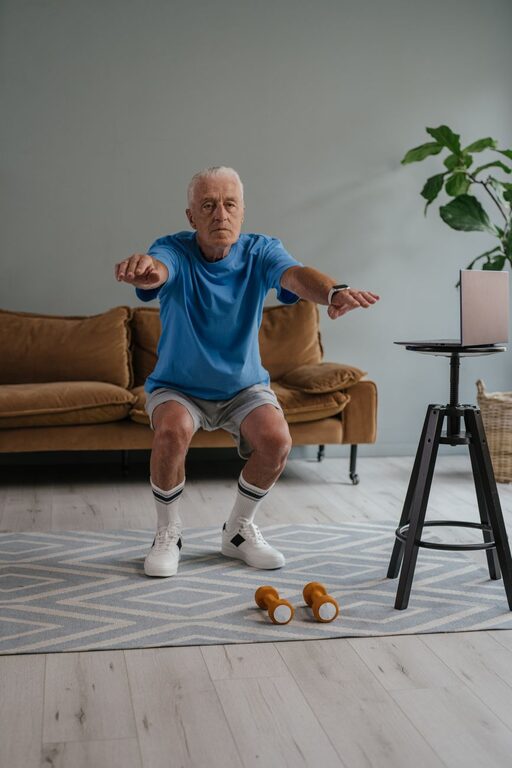
1. Chair Squats
Chair squats strengthen the thighs, hips, and lower body while practicing a movement used throughout the day.
- Stand in front of a sturdy chair with your feet about hip-width apart.
- Extend your arms forward or keep your hands lightly on your thighs.
- Bend your knees and slowly lower your hips toward the chair.
- Pause just above the seat, or sit down gently if needed.
- Press through your feet to stand tall.
Keep your chest lifted and your knees pointing in the same direction as your toes. Begin with one set of 8 to 10 repetitions. As the movement becomes easier, try two or three sets.
2. Wall Push-Ups
Wall push-ups work the chest, shoulders, arms, and upper body. They are a gentle way to practice pushing strength.
- Stand facing a wall, about an arm’s length away.
- Place your palms on the wall at about chest height.
- Bend your elbows and slowly bring your chest toward the wall.
- Push through your hands to return to the starting position.
Keep your body in a straight line from your head to your heels. Avoid letting your lower back sag. Try 8 to 12 repetitions, using a slower pace to make the exercise more challenging.
3. Step-Ups
Step-ups help build leg strength and coordination for climbing stairs and stepping onto curbs. Use the bottom step of a staircase or a low, stable platform.
- Stand near a railing or sturdy support.
- Place one foot on the step.
- Press through that foot to bring the other foot up.
- Step down carefully, leading with the same foot or alternating sides.
Start with a low step and hold the railing if needed. Keep your movements slow and controlled. Practice 5 to 8 repetitions on each side.
4. Glute Bridges
Glute bridges strengthen the hips and the muscles along the back of the body. They can be performed on a firm mat or carpet.
- Lie on your back with your knees bent and your feet flat on the floor.
- Place your arms by your sides.
- Tighten your stomach gently and press through your feet.
- Lift your hips until your body forms a comfortable line from your shoulders to your knees.
- Lower your hips slowly.
Do not force your hips higher than is comfortable. Begin with 8 to 12 repetitions, focusing on a smooth lift and controlled lowering phase.
5. Calf Raises
Calf raises help support the muscles used during walking, standing, and pushing off the ground.
- Stand behind a sturdy chair or near a countertop.
- Place your hands lightly on the support.
- Rise onto the balls of your feet.
- Pause briefly at the top.
- Lower your heels slowly.
Try 10 to 15 repetitions. For an additional challenge, pause for two or three seconds at the top of each repetition.
6. Supported Standing Row
This exercise strengthens the upper back and arms, which can support posture and pulling movements.
- Hold a light resistance band or a pair of light weights.
- Stand tall with your feet comfortably apart.
- Keep your shoulders relaxed and your arms extended forward.
- Pull your elbows back toward your ribs.
- Squeeze your shoulder blades gently, then return to the starting position.
Use a light resistance that allows you to maintain good control. Complete 8 to 12 repetitions. Keep your neck relaxed and avoid shrugging your shoulders.
7. Marching in Place
Marching in place combines gentle strength work with coordination. It can also prepare your body for walking.
- Stand near a wall or sturdy support.
- Lift one knee a few inches, then lower it.
- Lift the opposite knee.
- Continue alternating sides at a comfortable pace.
Keep your posture tall and your steps controlled. March for 20 to 30 seconds, rest, and repeat once or twice. If lifting your knees feels difficult, make the movement smaller.
How to Build a Simple Routine
You do not need a long workout to make strength training part of your week. Start with two nonconsecutive days each week. A basic session might include:
- Chair squats: 8 to 10 repetitions
- Wall push-ups: 8 to 12 repetitions
- Glute bridges: 8 to 12 repetitions
- Supported rows: 8 to 12 repetitions
- Calf raises: 10 to 15 repetitions
- Marching in place: 20 to 30 seconds
Rest for about 30 to 90 seconds between exercises, depending on how you feel. Begin with one round. After a few weeks of consistent practice, you may add a second round if the exercises feel comfortable.
Tips for Safe and Steady Progress
Use controlled movements
Moving slowly helps you stay aware of your position and makes it easier to maintain good form. Avoid bouncing, rushing, or using momentum to complete a repetition.
Choose the right level
An exercise should feel challenging but manageable. If you cannot complete the movement with control, reduce the number of repetitions, use a support, or choose an easier variation.
Practice consistency
A short routine performed regularly is often more useful than an occasional demanding workout. Add movement throughout the day by taking brief walks, standing during breaks, or using stairs when appropriate.
Allow time to recover
Give your muscles time to rest between strength sessions. Light walking and gentle movement can be included on other days, but avoid pushing through significant discomfort.
Make Mobility the Main Goal
Strength exercises are most valuable when they connect to real-life activities. As you practice, notice whether standing, walking, carrying, and climbing stairs feel more comfortable and controlled.
Keep your routine simple, focus on steady progress, and choose exercises that support the way you want to move each day. With regular practice, small improvements in strength can make everyday tasks feel more manageable and help you stay active with confidence.
